























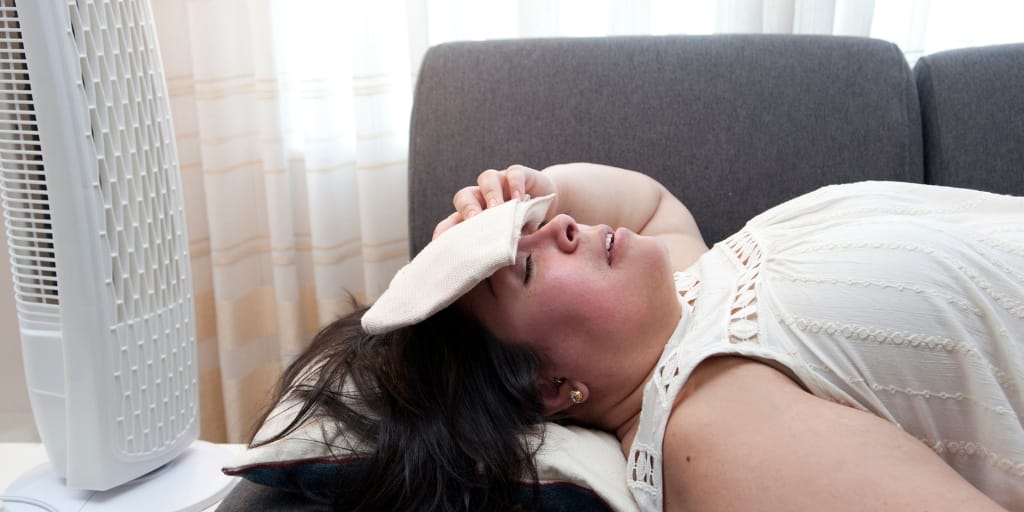
The recent heat warnings across the UK and Europe demonstrate that our world is warming up. It is likely that we will experience warmer summers each year.
Excessive heat causes high internal temperatures for everyone but can lead to particularly high internal temperatures in some properties due to:
- High solar gain resulting from significant glazing.
- The orientation of the property, particularly those with south-facing and west-facing windows.
- Thick insulation in walls, roofs and floors.
- A lack of external shading (such as external shutters, mature trees and deep roof overhangs).
- Poorly performing mechanical ventilation systems.
- Inadequate cross-ventilation.
This can cause issues for tenants and occupiers and can have particularly adverse impacts on their health.
What are tenants’ rights?
Since overheating presents such a risk, ‘Excess Heat’ is one of 21 hazards that may threaten the health or safety of occupiers. These hazards are placed into different categories under the Housing Health and Safety Rating System (HHSRS) and are used to assess risks to the health and safety of occupiers. These hazards are referred to as HHSRS hazards. It is important to note that HHSRS was updated on 23 June 2026, with revised guidance now available from the government. The updated guidance can be accessed here.
Under section 9A of the Landlord and Tenant Act 1985, there is an implied term in tenancies requiring a landlord to ensure that a property is fit for human habitation. Section 10 of the Landlord and Tenant Act 1985 also lists the factors to be considered in determining whether a landlord has breached this obligation. The factors relevant to overheating are ventilation and any prescribed hazard, which in this context includes ‘Excess Heat’.
Therefore, if the high internal temperatures of a property cause it to be unfit for human habitation, a landlord will need to take active steps to address the problem. This can include costly works such as replacing windows to reduce solar gain and carrying out repairs to ventilation systems.
The Hazards in Social Housing (Prescribed Requirements) (England) Regulations 2025 also known as ‘Awaab’s Law’ came into force on 27 October 2025. These regulations are often considered in the context of damp and mould because they followed the tragic death of Awaab Ishak, who died as a result of a severe respiratory condition due to prolonged exposure to mould in his home environment. However, the regulations do not only address damp and mould; they also impose an obligation on social landlords to address all emergency hazards.
The regulations define an ’emergency hazard’ as one that poses an imminent and significant risk of harm to the health or safety of the occupier in the social home. An ‘imminent and significant risk of harm’ is defined as:
“a risk of harm to the occupier’s health or safety that a reasonable lessor with the relevant knowledge would take steps to make safe within 24 hours”.
It is expected that later in 2026 the regulations will be extended to include additional hazards where they present a significant risk of harm, including excess heat.
What must a social landlord do to address hazards?
Social landlords must comply with strict timescales when responding to potential hazards. They must:
- Carry out an immediate initial assessment to determine whether there is an emergency. In many cases, this assessment may be undertaken by telephone based on information provided by the tenant.
- Address emergency hazards within 24 hours, either by remedying the hazard or by securing suitable temporary accommodation for the tenant.
- Where there is no emergency but there is a significant hazard, investigate the issue within 10 days and then remedy the problem, or provide temporary accommodation where necessary, within a further 5 days.
- Provide the tenant with a written summary of the issue and the steps being taken within 3 working days.
- Complete repairs within a reasonable timescale. Any delay should be justified and properly explained to the tenant.
Therefore, depending on the occupier’s health or other relevant risk factors, a landlord may be required to take prompt action to carry out emergency repairs. If a landlord cannot complete repairs within 24 hours to address an emergency hazard, they may also be required to secure suitable alternative accommodation.
What if a landlord does not comply?
Repairs required to address excess heat can be expensive and complex. Therefore, landlords may be reluctant to take adequate steps to address the issue.
A tenant may be able to take their landlord to court to obtain an order requiring works to be carried out, seek compensation, and in some cases rely on rights arising under ‘Awaab’s Law’. As this area of law is developing, tenants should obtain legal advice as soon as possible.
The Housing & Property Disputes team at Anthony Gold are specialists in this area of law. If you would like to speak to someone regarding issues in your home, please contact us on 020 7940 4060.
Please note
The information on the Anthony Gold website is for general information only and reflects the position at the date of publication. It does not constitute legal advice and should not be treated as such. It is provided without any representations or warranties, expressed or implied.

Related Insights

Our Latest Housing & Property Disputes Insights

- May 19, 2026
Renters’ Rights Act 2025: Essential information about the changes to the Private Rented Sector on 1 May 2026
- May 7, 2026
Ground 4A & Transitional Rules Under the Renters’ Rights Act
- May 6, 2026
Licence Agreement vs Tenancy Agreement: Complete Guide
- May 1, 2026
Renters’ Rights Act 2025 now in force: Key changes for landlords & tenants (May 2026)
- April 20, 2026
Anthony Gold Partner Giles Peaker sadly passes away
- February 12, 2026
Eleanor Solomon quoted in Inside Housing on Sapphire Court Evacuation
Latest Articles
View all
Insights: June 24, 2026
Guides: June 19, 2026








Online Payments

© Anthony Gold Solicitors LLP. All rights reserved. Anthony Gold Solicitors LLP is a limited liability partnership registered in England and Wales with registered number OC433560 and is authorised and regulated by the by the Solicitors Regulation Authority with registration Number 810601


