



















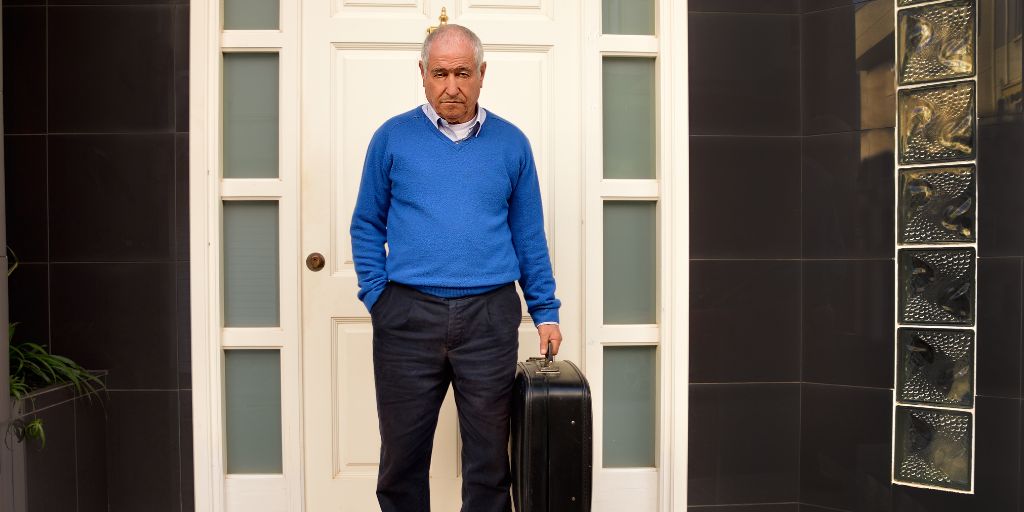





Undue influence is a notoriously difficult claim to make in the context of Will-writing, as the now-deceased testator would usually be the best person to ask if they were put under pressure to sign a Will. Court decisions have helpfully produced case law which sheds light on the burden of proof required and what can (and cannot) count as coercion.
Edwards v Edwards [2007]
Mrs Edwards had 3 sons: one, Reggie, predeceased her and the surviving two, John and Terry, were parties to the dispute. Mrs Edwards had a close and trusting relationship with John and his wife, Carol, who supported her regularly. Mrs Edwards’s relationship with Terry was unfortunately strained due to his alleged abusive behaviour.
Shortly before Mrs Edwards’s death, Terry removed her from a nursing home against medical advice. During this period, he isolated her from John and Carol, fed her false allegations that they were stealing money, and she unexpectedly made a new Will in 2001 leaving everything to Terry.
An important question the court had to consider was whether the fraudulent calumny (that is, when someone spreads false statements to poison someone else’s mind against a person) made by Terry against John and Carol influenced Mrs Edwards to such an extent that her free will was overborne. So important was this question that Edwards v Edwards has, in fact, been cited as an authority when considering fraudulent calumny and its role in undue influence.
The court found that Terry had indeed coerced Mrs Edwards and overborne her free will. Mrs Edwards was frail, vulnerable, and emotionally distressed by Reggie’s death. Terry’s drinking and aggressive behaviour was also relevant. And importantly, the accusations against John and Carol were found to be false and designed to poison Mrs Edwards’s mind against them. The 2001 Will was therefore held to be invalid due to undue influence, and an earlier will in 1990 leaving her estate in equal shares to her three sons was reinstated.
Gill v Woodall [2010]
Mr and Mrs Gill were married and had one daughter, Dr Gill. Mr and Mrs Gill prepared Wills in 1993 leaving their estates to each other, then to the RSPCA on the second death. The Wills notably excluded her daughter, stating that she was well provided for.
Mr Gill died in 1999 without his Will being proved, and Mrs Gill died in 2006. Dr Gill disputed her mother’s 1993 Will.
Despite the Will being prepared by a solicitor and the fact that it was read over to Mrs Gill before its execution, the court heard that she suffered from severe agoraphobia and panic disorder, which deprived her of her ability to comprehend the will that she was executing. The court considered that the 1993 Will was therefore not valid on the basis of lack of knowledge and approval.
While no new legal precedent was established, it is an interesting decision based on exceptional circumstances, namely, Mrs Gill’s severe mental health condition.
Rea v Rea [2024]
A very recent case at the time of writing, it concerns Anna Rea, who died in 2016 leaving a 2015 Will that gave her house to her daughter Rita rather than dividing her estate equally among her four children as in previous Wills. Her other children challenged the Will for undue influence.
The High Court ruled the Will invalid, but the Court of Appeal overturned that decision. While Rita was noted to have had a strong personality and even a ‘forceful physical presence’, the court held that undue influence must be ‘more probable than any other explanation’.
The attempt to refute the presumption of having testamentary capacity was made even more difficult as there was a ‘perfectly rational basis’ for giving Rita the property, as she lived there and looked after the deceased for 6 years, whereas the other children didn’t care for her and ‘had abandoned her’.
Rea v Rea clarified the modern test for undue influence in Will disputes and made it clear that while alternative explanations need not be eliminated, undue influence must still be the most likely cause of the Will’s terms. Lord Justice Newey helpfully summed up this test:
‘I would accept that undue influence can be proved without demonstrating that the circumstances are necessarily inconsistent with any alternative hypothesis. On the other hand, the circumstances must be such that undue influence is more probable than any other hypothesis. If another possibility is just as likely, undue influence will not have been established. When making that assessment, moreover, it may well be appropriate to proceed on the basis that undue influence is inherently improbable.’
Against your Will?
Undue influence claims frequently arise in relation to homemade Wills. Unlike professionally drafted Wills, homemade Wills often lack independent evidence of the circumstances surrounding their preparation and execution, including who was present, whether the testator received independent advice, and whether they understood and approved the contents of the document. There is usually no detailed attendance note, capacity assessment, or record of the testator’s instructions.
Homemade Wills are also more likely to contain ambiguities, drafting errors, or provisions that depart significantly from previous testamentary arrangements without any explanation. Where a substantial benefit is left to a person involved in preparing the Will or arranging its execution, the absence of independent professional oversight can make it more difficult to rebut allegations of undue influence. These factors can increase the risk of disputes, challenges to the validity of the Will, and costly litigation for the estate.
While professionally drafted Wills generally benefit from a strong presumption of validity, they are not immune from challenge. Disputes can still arise on grounds such as lack of testamentary capacity, want of knowledge and approval, undue influence, fraud, or forgery. However, professional involvement often provides important evidential safeguards, including attendance notes, records of instructions, correspondence, and details of the execution process. Solicitors may also assess a testator’s capacity, particularly where concerns exist, and ensure that the testator understands and approves the contents of the Will. As a result, challenges to professionally drafted Wills can be more difficult to establish, as contemporaneous documentation frequently assists the court in determining the circumstances in which the Will was prepared and executed.
At Anthony Gold, we take these concerns seriously when preparing your Will, especially considering the trend in the rise of contested estates. Do not hesitate to get in touch with our experienced Wills, Trusts & Estates team to see how we can help you make a Will which stands up to scrutiny. We regularly work with testamentary capacity specialists who can provide an independent capacity assessment for you or for a loved one, to minimise the success of any challenge against your estate. Or, if you have concerns as to the validity of a Will or handling of an estate, why not contact our specialist Contentious Probate department.
Please contact us on 020 7940 4060 or email us at mail@anthonygold.co.uk
Please note
The information on the Anthony Gold website is for general information only and reflects the position at the date of publication. It does not constitute legal advice and should not be treated as such. It is provided without any representations or warranties, expressed or implied.


Related Insights

Our Latest Wills, Trusts & Estates Insights

- June 11, 2026
Estate Planning Isn’t Just for Homeowners
- June 1, 2026
Watch out – HMRC is about!
- May 28, 2026
Avoiding Exploitation: Protecting Yourself and your Wishes
- April 24, 2026
Inheritance tax receipts continue to rise in latest HMRC figures
- April 22, 2026
The changing Inheritance Tax treatment of pensions in the UK
- March 20, 2026
Sean Hughes’ £4m estate dispute: What his homemade Will teaches about estate planning
Related Guides
Latest Articles
View all
Guides: June 19, 2026
Guides: June 11, 2026







Online Payments

© Anthony Gold Solicitors LLP. All rights reserved. Anthony Gold Solicitors LLP is a limited liability partnership registered in England and Wales with registered number OC433560 and is authorised and regulated by the by the Solicitors Regulation Authority with registration Number 810601


