



















Aretha Franklin is better known for being the Queen of Soul than she is for the technicalities of the law. But the late hit singer and renowned civil rights activist re-emerged into the headlines recently thanks to a handwritten note found under a sofa cushion.
What Happened to Aretha Franklin’s Will?
When Franklin died in 2018, it was thought that she left no formal Will. However, in subsequent years, two different notes were found amongst the possessions of the Respect singer, controversially naming different sons as executors of her estate.
The first note was found locked in a cabinet and dated back to 2010 whereas the second note unearthed from a sofa cushion was written four years later and saw one son’s name crossed out and replaced with another.
Under the terms of the more recent handwritten note, one of Franklin’s sons would receive less from her estate than the others.
After a protracted legal battle amongst Franklin’s sons, a US jury took just one hour to conclude that the latter note does indeed constitute a legally valid Last Will and Testament, taking legal precedence over all earlier versions of the singer’s wishes.
But digging beneath the drama and the headlines in this case reveals a very pertinent reminder for everyone about the importance of having a formal and correctly executed Will, ideally prepared by a legal professional.
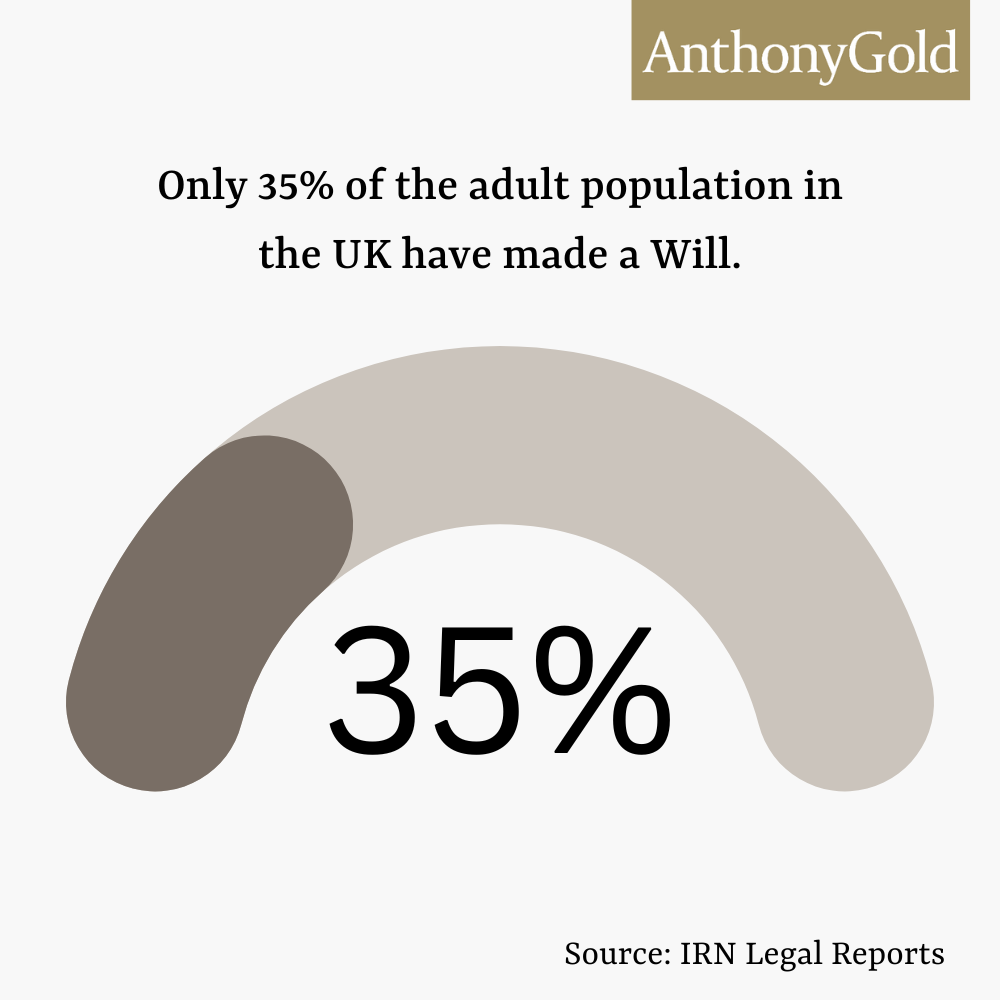
According to consumer research from IRN Legal Reports, only 35% of the adult population in the UK have made a Will.
If you are unsure whether writing a Will is the right step for you (or is even important) then here are five reasons to change your mind.
5 Reasons Why You Should Make a Will
- Make your wishes clear: As Franklin’s case exemplifies, a Will is critical to ensuring that any ambiguity is avoided after your death, and that your wishes are clear and respected.
- Avoid Disputes. Although there are no juries involved in contentious probate hearings in the UK, having a Will that clearly sets out your wishes will leave less room for arguments between family members about who is entitled to what from your estate. This undeniably mitigates the stress and costs that could otherwise be involved in protracted contentious probate litigation. Learn more about accepting inheritance left to you under a Will or the Intestacy rules.
- Avoid the Intestacy Rules. If you die without a Will, the law dictates who will receive what from your estate. This could mean that a family member you do not get on well with receives a share of your estate. Having a Will makes it clear who you want to benefit from your estate – even if that is charities rather than people.
- Reduce your Inheritance Tax Bill. Contrary to rumours, having a Will is indeed an effective tool to help reduce the inheritance tax on your death. Instructing a solicitor to take into account all of your circumstances and help you take advantage of all the available exemptions and reliefs will help you to maximise your estate for your loved ones.
- Set Out Your Funeral Wishes. You can use your Will to set out how you would like your body to be treated after you die, what kind of service you would like and even what music you would like played! Learn more about Funeral Wishes.
Making your Will without using a solicitor can result in ambiguity or mistakes. Instructing a solicitor is beneficial as they will take the time to explain your options, advise you of the tax implications and make suggestions for you to consider, making sure that your Will perfectly represents your wishes.
At Anthony Gold, we store Wills safely at our off-site storage facility at no extra cost so that you don’t need to leave anything in your sofa!
Please note
The information on the Anthony Gold website is for general information only and reflects the position at the date of publication. It does not constitute legal advice and should not be treated as such. It is provided without any representations or warranties, expressed or implied.

Our Latest Wills, Trusts & Estates Insights

- February 27, 2026
Beyond Burial and Cremation: A guide to modern funeral and memorial alternatives in the UK
- January 29, 2026
Who owns a body after death? The legal principles behind burial rights and human remains
- December 17, 2025
Why professional help matters: Avoiding LPA rejections and protecting your future
- November 22, 2025
Islamic Wills in Non-Muslim Majority Countries Like the UK
- November 22, 2025
Does Marriage or Divorce Affect Your Will? UK Trusts & Estates Solicitor Explains
- November 21, 2025
Assisted dying in the UK: Legal developments and inheritance implications
Related Guides

Latest Articles
View all
Insights: February 20, 2026
Online Payments

© Anthony Gold Solicitors LLP. All rights reserved. Anthony Gold Solicitors LLP is a limited liability partnership registered in England and Wales with registered number OC433560 and is authorised and regulated by the by the Solicitors Regulation Authority with registration Number 810601


